A common spelling confusion in English is deciding whether the correct word is “business” or “buisness.”
If you have ever searched for “business or buisness,” you are not alone. This is a common spelling question because the pronunciation of business does not make its spelling completely obvious.
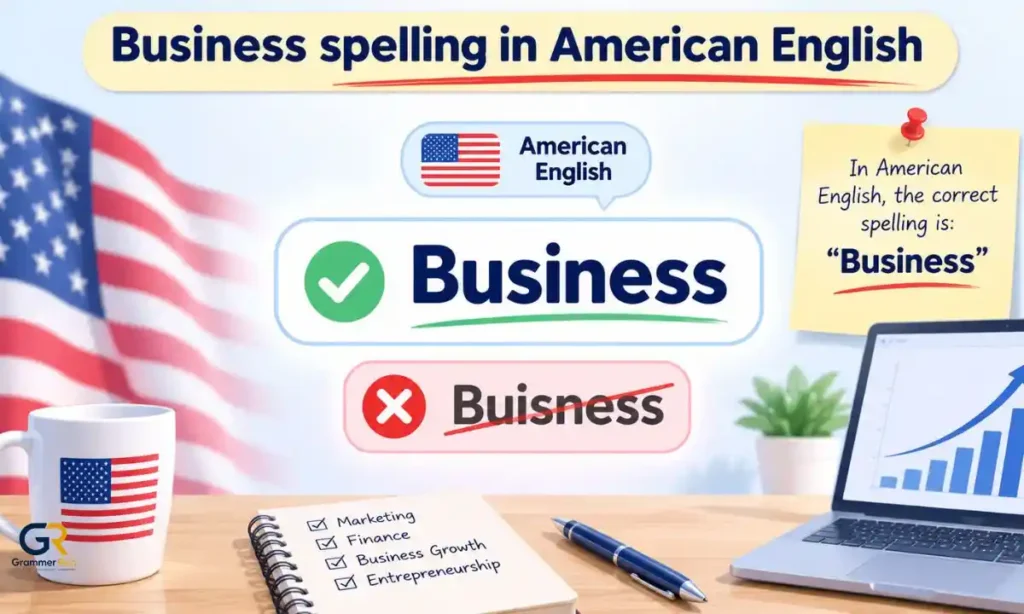
The correct spelling is business.
The spelling buisness is incorrect.
When comparing business or buisness, the difference may look small, but the letter order matters. Business is spelled B-U-S-I-N-E-S-S, while buisness incorrectly changes the position of the “s” and “i.”
The word business is extremely common in American English. It can describe a company, commercial activity, professional work, or someone’s affairs. You will see it in expressions such as small business, business ideas, online business, business plan, business management, business development, business strategy, and business growth.
This article explains business or buisness in detail, including the correct spelling, definition, pronunciation, common mistakes, usage, examples, related words, and simple spelling tips.
Correct Spelling and Definition
The correct spelling is “business.”
The incorrect spelling is “buisness.”
Business is a noun with several related meanings.
Most commonly, business refers to an organization or company that sells products or services.
For example:
“She owns a small business.”
In this sentence, business refers to a company or commercial organization.
Business can also refer to commercial activity.
For example:
“International business is an important part of the economy.”
Here, business describes commercial activity between countries or markets.
The word can also mean work or professional activity.
For example:
“He is traveling on business.”
Business can also refer to someone’s personal matters or concerns.
For example:
“That is none of your business.”
Therefore, when discussing business or buisness, it is important to understand that business has several meanings depending on the context.
Also read:Separate or Seperate: Which One Is Correct?
Business or Buisness: The Quick Answer
If you only need the answer to business or buisness, it is very simple:
Business is correct.
Buisness is incorrect.
Here is a quick comparison:
| Spelling | Correct? | Meaning |
| business | Yes | A company, commercial activity, work, or professional matter |
| buisness | No | Common misspelling of business |
| bussiness | No | Incorrect extra “s” |
| busines | No | Missing final “s” |
| businesses | Yes | Correct plural form |
| buisnesses | No | Incorrect plural form |
So, whenever you are unsure about business or buisness, choose business.
Why Is Business Correct?
The standard spelling is:
B-U-S-I-N-E-S-S
The first four letters are:
B-U-S-I
This is important because people who write buisness usually switch the “s” and “i.”
Correct:
business
Incorrect:
buisness
The correct spelling begins with “bus.”
This gives us a simple memory pattern:
BUS + INESS
BUSINESS
The incorrect form does not follow this pattern.
Understanding this difference makes the business or buisness question much easier to answer.
Why Is Buisness Incorrect?
Buisness is incorrect because the letters are arranged incorrectly.
The correct spelling is:
BUSINESS
The common misspelling is:
BUISNESS
Compare the first four letters:
BUSI
versus:
BUIS
The “s” comes before the “i” in business.
The “s” does not come after the “i.”
This is the main spelling difference between business or buisness.
The incorrect form may appear in casual writing, online searches, messages, notes, or typed documents, but it is not accepted as the standard spelling.
If you are writing professionally, use business.
Why Do People Confuse Business or Buisness?
There are several reasons people confuse business or buisness.
Pronunciation
The pronunciation of business does not sound exactly like the spelling.
In American English, business is commonly pronounced approximately “BIZ-niss.”
Because the pronunciation is shorter and different from the written form, learners may not know where each letter belongs.
Letter Order
The letters “u,” “s,” and “i” can be easy to rearrange.
Someone may remember the general shape of the word but accidentally write:
buisness
instead of:
business
Fast Typing
Typing quickly can cause letters to change positions.
Since buisness looks very similar to business, the mistake may not be noticed immediately.
Visual Memory
Some people remember a word by its overall appearance instead of its exact spelling.
When they try to reproduce the word from memory, they may place the letters incorrectly.
English Spelling Patterns
English contains many words whose pronunciation does not perfectly predict their spelling.
Business is one of those words.
For this reason, learning the written pattern is often more effective than trying to spell the word entirely from sound.
Business or Buisness and Pronunciation
Pronunciation is one of the biggest reasons behind the business or buisness confusion.
Business is commonly pronounced approximately:
BIZ-niss
In phonetic notation, a common American English pronunciation is:
/ˈbɪznəs/
The written form, however, contains eight letters:
B-U-S-I-N-E-S-S
The spoken form does not clearly reveal every letter.
This is why someone may hear the word and then try to reconstruct the spelling incorrectly.
If you are learning English, remember that pronunciation and spelling do not always correspond perfectly.
When considering business or buisness, rely on the established written spelling:
business.
How Do You Spell Business?
If you often ask, “how do you spell business?” there is a simple way to remember it.
Start with:
BUS
Then add:
INESS
Together:
BUS + INESS = BUSINESS
The complete spelling is:
B-U-S-I-N-E-S-S
This is the correct spelling.
Do not rearrange the first four letters into:
B-U-I-S
The correct beginning is:
B-U-S-I
This small pattern can help you solve the business or buisness question quickly.
A Simple Memory Trick for Business
A useful memory trick is to remember:
Business starts with BUS.
Think about the word “bus.”
BUS
Then add:
INESS
BUS + INESS
BUSINESS
This is a simple visual trick for remembering business or buisness.
If you remember that the word starts with “bus,” you are less likely to write buisness.
You can also practice the word in common phrases:
- small business
- online business
- business plan
- business ideas
- business strategy
- business management
Seeing business repeatedly helps reinforce the correct spelling.
What Does Business Mean?
Business can mean several things.
First, it can refer to a company or organization.
Example:
“The business employs several people.”
Second, it can mean commercial activity.
Example:
“Business between the two countries has increased.”
Third, it can refer to professional work.
Example:
“She is away on business.”
Fourth, it can refer to personal matters.
Example:
“That is private business.”
The exact meaning depends on the sentence.
Regardless of the meaning, the spelling remains:
business.
Not:
buisness.
Business as a Company
One of the most common meanings of business is a company.
For example:
“They opened a new business.”
“The business has five employees.”
“The business serves customers across the country.”
A business can be very small or extremely large.
It can operate locally, nationally, or internationally.
Examples include:
- Restaurants
- Retail stores
- Technology companies
- Consulting firms
- Construction companies
- Marketing agencies
- Online stores
- Accounting firms
- Manufacturing companies
- Professional service providers
This meaning is especially common when people discuss entrepreneurship.
Small Business
Small business is an important phrase in American English.
A small business is generally a relatively small company or commercial operation. The exact definition can depend on industry and applicable government standards.
Examples include:
- Local restaurants
- Independent stores
- Freelance businesses
- Home-based services
- Small professional firms
- Family-owned companies
People often search for small business ideas when they want to become entrepreneurs.
They may also search for:
- small business startup
- small business marketing
- small business loans
- small business insurance
- small business funding
- best small business ideas
When discussing these topics, remember the spelling:
business.
Business Ideas
Business ideas are possible concepts for starting or developing a company.
People search for business ideas for many reasons.
Some may want to leave traditional employment.
Others may want an additional source of income.
Some may simply want to explore entrepreneurship.
Popular search phrases include:
- business ideas
- small business ideas
- online business ideas
- home business ideas
- profitable business ideas
- low cost business ideas
- profitable small business ideas
- business ideas with low investment
A business idea should not be judged only by how popular it sounds.
Entrepreneurs should also consider customer demand, competition, startup costs, skills, location, and long-term sustainability.
Best Business Ideas
There is no single business idea that is automatically the best for everyone.
When people search for “best business ideas,” they may have different goals.
One person may want a business that requires little startup capital.
Another may want an online business.
Someone else may prefer a local service business.
Factors to consider include:
- Startup cost
- Customer demand
- Competition
- Required skills
- Operating expenses
- Time commitment
- Potential revenue
- Growth opportunities
- Legal requirements
The same principle applies to the phrase “best small business ideas.”
The best option depends on the entrepreneur’s circumstances.
Online Business
An online business conducts some or most of its operations through the internet.
Examples include:
- Online stores
- Freelance services
- Consulting
- Digital education
- Software services
- Subscription businesses
- Digital products
- Online marketing services
People interested in this area often search for:
“how to start an online business”
or:
“online business to start”
Starting an online business can have lower physical overhead than some traditional businesses, but it still requires planning, customer research, marketing, financial management, and ongoing work.
How to Start a Business
If you are researching how to start a business, begin with a clear problem or customer need.
A basic process may include:
- Identify a business idea.
- Research your target customers.
- Study competitors.
- Estimate startup and operating costs.
- Develop your product or service.
- Create a business plan.
- Choose an appropriate business structure.
- Complete applicable registrations and permits.
- Develop a marketing strategy.
- Track performance and improve the business.
The exact process can differ depending on the location and type of business.
How to Start a Small Business
Learning how to start a small business requires both practical and financial planning.
First, determine what you want to sell and who will buy it.
Then research the market.
You should understand your expected expenses and possible sources of revenue.
A small business startup may involve costs for:
- Equipment
- Inventory
- Software
- Advertising
- Insurance
- Licenses
- Professional services
- Workspace
- Transportation
Careful planning can help reduce unexpected problems.
How to Start a Business From Home
Many entrepreneurs search for how to start a business from home.
A home-based business can be attractive because it may reduce certain overhead expenses.
Possible businesses to start from home include:
- Freelance writing
- Graphic design
- Tutoring
- Consulting
- Virtual assistance
- Online retail
- Bookkeeping
- Digital services
- Social media services
- Handmade products
However, a home business may still require permits, insurance, equipment, taxes, and other expenses.
Before starting, check the rules that apply to your business and location.
Best Business to Start With Little Money
The phrase “best business to start with little money” is commonly associated with service-based businesses.
Some low cost business ideas can be started with limited equipment if the entrepreneur already has the necessary skills.
Examples may include:
- Freelance writing
- Tutoring
- Consulting
- Cleaning
- Pet care
- Virtual assistance
- Graphic design
- Social media management
However, low cost does not mean free.
Even a small operation may have expenses.
It is important to estimate the total cost before choosing a business opportunity.
Business Plan
A business plan describes how a business will operate and pursue its goals.
A basic business plan may contain:
- Business description
- Target market
- Products or services
- Competitive analysis
- Marketing plan
- Operations plan
- Management structure
- Financial projections
- Funding needs
A business plan can help entrepreneurs organize their ideas.
It can also help them identify weaknesses before investing significant money.
Business Management
Business management involves overseeing the activities needed to operate a company.

It can include:
- Employee management
- Financial management
- Operations
- Customer service
- Planning
- Goal setting
- Resource management
- Performance tracking
Good business management helps a company use its resources effectively.
Also read:Definitely or Definately: Which One Is Correct?
The word business appears frequently in this field, including phrases such as business administration and business management.
Business Development
Business development focuses on creating opportunities for growth.
A business development strategy may include:
- Finding new customers
- Creating partnerships
- Entering new markets
- Developing new products
- Improving sales opportunities
- Building professional relationships
Business development is different from simply making sales. It can involve long-term relationship building and strategic expansion.
Business Strategy
A business strategy is a plan for achieving business objectives.
It may address:
- Target customers
- Products
- Pricing
- Competition
- Marketing
- Operations
- Technology
- Growth
A business strategy should be realistic and connected to the resources available to the organization.
The term business strategy is common in both academic and professional settings.
Business Marketing
Business marketing involves promoting products or services to potential customers.
A business marketing strategy may include:
- Content marketing
- Email marketing
- Social media
- Search marketing
- Advertising
- Referrals
- Partnerships
- Events
Small businesses often need to be especially careful with marketing budgets.
Tracking results can help identify which marketing activities are producing useful outcomes.
Small Business Marketing
Small business marketing focuses on helping smaller companies attract and retain customers.
Common methods can include:
- Local marketing
- Social media
- Customer referrals
- Online content
- Community events
- Paid advertising
The right approach depends on the business and its customers.
A local restaurant may need a different small business marketing strategy from an online software company.
Business Services
Business services are services provided to other companies or organizations.
Examples include:
- Accounting
- Consulting
- Marketing
- Legal services
- Information technology
- Human resources
- Cleaning
- Training
Business services allow companies to access specialized skills and support.
Business Consulting
Business consulting involves providing professional advice to companies.
A consultant may help with:
- Business strategy
- Operations
- Marketing
- Technology
- Finance
- Management
- Growth
The value of consulting depends on the specific business problem and the expertise of the consultant.
Business Finance
Business finance focuses on how a company manages money.
It can involve:
- Revenue
- Expenses
- Cash flow
- Budgeting
- Financing
- Investment
- Financial planning
Understanding business finance is important because revenue alone does not determine whether a company is financially healthy.
A company must also manage costs, cash flow, obligations, and available capital.
Business Accounting
Business accounting involves recording and organizing financial information.
It can help a company understand:
- Income
- Expenses
- Assets
- Liabilities
- Profit
- Loss
- Taxes
- Cash flow
Accurate business accounting can support better financial decisions.
Business Technology
Technology is now an important part of many businesses.
Business technology can support:
- Communication
- Accounting
- Marketing
- Customer service
- Sales
- Inventory
- Data management
- Cybersecurity
- Collaboration
The best technology depends on the company’s actual needs.
Business Analytics
Business analytics involves examining data to understand business performance.
A company might analyze:
- Sales
- Website traffic
- Customer behavior
- Marketing performance
- Expenses
- Revenue
- Inventory
Business analytics can help managers identify trends and make more informed decisions.
Business Intelligence
Business intelligence generally refers to tools and processes used to turn business data into useful information.
For example, a company might use business intelligence to compare sales performance across different locations or identify changes in customer behavior.
The purpose is to support better business decisions.
Business News
Business news covers developments involving companies, industries, markets, economics, and commercial activity.
People may follow business news to understand:
- Corporate developments
- Market changes
- Economic trends
- Technology
- Employment
- Industry developments
- Business regulations
Business news can be particularly useful for people who operate companies or make business decisions.
Business Opportunities
Business opportunities are situations that may allow an entrepreneur or company to provide a product or service that customers want.
Opportunities can arise from:
- Changing customer needs
- New technology
- Market gaps
- New industries
- Local demand
- Consumer trends
However, an opportunity should be researched before money is invested.
A popular trend does not automatically mean there is a profitable business opportunity.
Business Growth
Business growth can happen in many ways.
A company may grow by:
- Gaining customers
- Increasing sales
- Entering new markets
- Adding products
- Improving operations
- Building partnerships
- Increasing capacity
Business growth should be managed carefully.
Growing too quickly can create problems with cash flow, staffing, customer service, and operations.
Business for Sale
A business for sale is an existing company that its owner is offering to another person or organization for purchase.
Buying an existing business can provide access to assets such as:
- Existing customers
- Employees
- Equipment
- Suppliers
- Branding
- Operating systems
- Revenue history
However, potential buyers should carefully review the company’s financial records, contracts, liabilities, reputation, and market position before purchasing it.
Small Business Loans
Small business loans can provide financing for eligible companies.
Funding may be used for expenses such as:
- Equipment
- Inventory
- Working capital
- Expansion
- Technology
- Property
Before accepting a loan, a business owner should understand the interest rate, repayment period, fees, collateral requirements, and effect on cash flow.
Small Business Funding
Small business funding can come from different sources depending on the company and its circumstances.
Possible sources can include:
- Business loans
- Personal savings
- Investors
- Business grants where available
- Revenue reinvestment
- Other financing arrangements
Each funding option has different requirements and risks.
Business owners should evaluate financing carefully rather than choosing an option solely because it provides quick access to money.
Small Business Insurance
Small business insurance can help protect a company against certain risks.
The appropriate coverage depends on factors such as:
- Industry
- Location
- Employees
- Property
- Customers
- Business activities
Different businesses may need different types of coverage.
Business owners should evaluate their specific risks and applicable requirements before selecting insurance.
Common Spelling Errors Related to Business
Business or buisness is one of many spelling questions that arise in English.
Other common examples include:
| Correct Spelling | Common Misspelling |
| Business | Buisness |
| Necessary | Neccessary |
| Definitely | Definately |
| Separate | Seperate |
| Receive | Recieve |
| Embarrassed | Embarassed |
| Occurred | Occured |
These mistakes often happen because English spelling cannot always be predicted directly from pronunciation.
Learning common spelling patterns can make these words easier to remember.
Business or Buisness: Common Incorrect Forms
The main incorrect form is buisness, but other variations can appear.
Examples include:
- buisness
- bussiness
- busines
- buisnes
- buisnesses
- bussines
- bussines
- busness
These forms should not be used as alternatives to business.
The standard spelling is:
business
If you are checking business or buisness, always choose business.
Business or Buisness in Professional Writing
Correct spelling matters in professional communication.
You may use business in:
- Resumes
- Cover letters
- Business emails
- Reports
- Presentations
- Business plans
- Websites
- Marketing materials
- Proposals
- Applications
For example:
Incorrect:
“I want to start my own buisness.”
Correct:
“I want to start my own business.”
The second version is the standard English form.
Also read:Friend or Freind: Which One Is Correct?
Business or Buisness in Search Queries
People sometimes type misspelled words into search engines because they are unsure of the spelling.
This explains why phrases such as:
business or buisness
business spelling
buisness spelling
how do you spell business
correct spelling of business
may be searched by English learners and other users.
If you are creating educational content about spelling, it is useful to understand the search intent behind these phrases.
However, incorrect spellings should be explained naturally rather than repeated excessively.
The purpose of spelling content is to help readers learn the correct form.
Business or Buisness in Everyday Sentences
Here are examples using the correct spelling.
“Her business is growing quickly.”
“He wants to start a small business.”
“They created a business plan.”
“The business provides professional services.”
“She is interested in online business ideas.”
“The company needs a stronger business strategy.”
“Good business management is important.”
“They are researching business opportunities.”
“The business is focused on long-term growth.”
“She studied business administration.”
In every example, the correct spelling is business.
Incorrect and Correct Examples
Incorrect:
“She started a buisness last year.”
Correct:
“She started a business last year.”
Incorrect:
“The buisness has many customers.”
Correct:
“The business has many customers.”
Incorrect:
“He created a buisness plan.”
Correct:
“He created a business plan.”
Incorrect:
“They are looking for buisness opportunities.”
Correct:
“They are looking for business opportunities.”
Incorrect:
“She reads buisness news every morning.”
Correct:
“She reads business news every morning.”
Incorrect:
“The buisness strategy needs improvement.”
Correct:
“The business strategy needs improvement.”
These examples make the business or buisness difference clear.
Business or Buisness: Correct Plural Form
The plural of business is businesses.
Singular:
business
Plural:
businesses
Example:
“One business operates in the area.”
“Several businesses operate in the area.”
The spelling buisnesses is incorrect.
Therefore:
business → businesses
not:
buisness → buisnesses
Learning the singular and plural forms together can make the spelling easier to remember.
Business and Busyness Are Not the Same
Another interesting spelling issue involves business and busyness.
These are different words.
Business can mean a company, commercial activity, professional work, or someone’s affairs.
Busyness refers to the condition of being busy.
For example:
“She owns a successful business.”
This refers to a company.
“The busyness of the office made it difficult to concentrate.”
This refers to a high level of activity.
Therefore, busyness should not be used as a spelling alternative to business.
Is Buisness Ever Correct?
No.
Buisness is not the standard spelling of the word.
If you are deciding between business or buisness, use:
business
The spelling buisness is a common misspelling caused by switching the positions of “s” and “i.”
Is Business Spelled Correctly?
Yes.
Business is the correct standard spelling.
The complete spelling is:
B-U-S-I-N-E-S-S
It has eight letters.
The most important sequence to remember is:
BUSI
not:
BUIS
This distinction answers the business or buisness question.
Why Correct Spelling Matters
Correct spelling helps make writing clearer and more professional.
This is especially important when writing:
- Job applications
- Business emails
- School assignments
- Reports
- Websites
- Resumes
- Marketing content
- Business proposals
A single spelling mistake may not change the meaning, but repeated mistakes can affect how polished a document appears.
Because business is such a common word, learning its correct spelling is worthwhile.
Tips for Avoiding the Buisness Mistake
Remember the Word “Bus”
The easiest method is to remember that business starts with BUS.
BUS + INESS
BUSINESS
Focus on the First Four Letters
The first four letters are:
B-U-S-I
Not:
B-U-I-S
Learn the Word in Common Phrases
Practice:
small business
business plan
business ideas
online business
business management
business strategy
business development
business growth
Repeated exposure makes the correct spelling more familiar.
Read the Word Regularly
Reading business-related material can help reinforce the spelling.
You will frequently see the word in news, articles, reports, advertisements, company information, and educational content.
Use Spell Check
Spell-checking tools can identify many common mistakes.
However, understanding the correct spelling yourself is still valuable.
A Quick Business Spelling Test
Try completing the word:
B-U-S-?-N-E-S-S
The missing letter is:
I
So the answer is:
BUSINESS
Now compare it with the incorrect form:
B-U-I-S-N-E-S-S
The letters are in the wrong order.
This simple test can help you remember the difference whenever you encounter business or buisness.
Final Thoughts
When comparing business or buisness, the answer is clear: business is the correct spelling, while buisness is an incorrect spelling. Business is an extremely common English word used for companies, commercial activity, professional work, and personal matters. It also appears in many common phrases, including small business, business ideas, online business, business plan, business management, business development, business strategy, business marketing, business growth, and business opportunities. The easiest way to remember the spelling is to focus on the first three letters, “BUS.” Think of the word as BUS + INESS, which gives BUSINESS. If you are ever unsure about business or buisness, choose business.
FAQs
: What is the correct spelling, business or buisness?
Business is the correct spelling. Buisness is a common misspelling caused by switching the positions of the “s” and “i” in the first part of the word.
Why do people spell business as buisness?
People often spell business as buisness because the pronunciation does not clearly reveal the exact order of every letter. Fast typing and visual memory can also cause the “s” and “i” to be switched.
How many letters are in the word business?
Business has eight letters: B-U-S-I-N-E-S-S. The word begins with “BUS,” which is a useful way to remember its spelling.
What is the plural of business?
The plural form is businesses. For example, “Many small businesses serve their local communities.” Buisnesses is not a correct spelling.
What is the difference between business and busyness?
Business can mean a company, commercial activity, professional work, or personal affairs. Busyness means the state or condition of being busy. They are different words with different meanings.