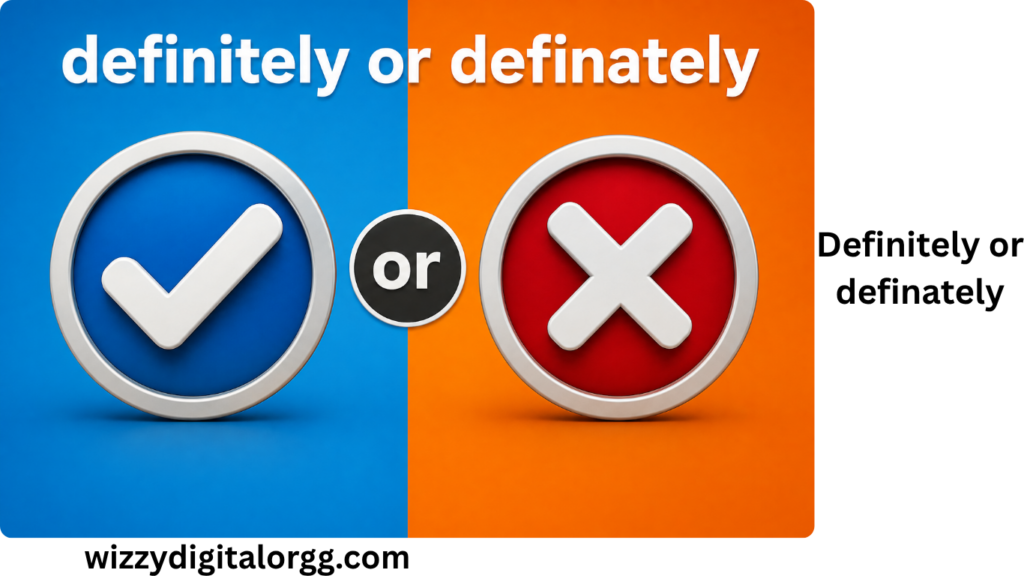
If you are wondering, “Which one is correct: definitely or definately?” the correct spelling is definitely.
Definitely is the standard English spelling. Definately is a common misspelling and is not considered correct in standard American English.
The confusion is understandable because definitely is pronounced in a way that can make the middle vowel sound less clear. Many people remember the word as if it were spelled “definately,” especially because the word is related to definite. However, the correct spelling keeps the “-ite-” pattern found in definite:
- Correct: definitely
- Incorrect: definately
- Incorrect: definatly
- Incorrect: definitly
- Incorrect: definetly
For example:
I will definitely call you tomorrow.
Not:
I will definately call you tomorrow.
This small spelling difference matters in school, professional writing, applications, emails, essays, and other formal communication.
What Is the Correct Spelling: Definitely or Definately?
The correct spelling is definitely.
The word is spelled:
D-E-F-I-N-I-T-E-L-Y
The incorrect form “definately” is extremely common, but it does not follow the standard spelling of the English word.
The easiest way to see the difference is to compare the two forms:
| Spelling | Correct? | Explanation |
| definitely | Yes | Standard English spelling |
| definately | No | Common misspelling |
| definatly | No | Missing letters |
| definitly | No | Missing the “e” |
| definetly | No | Incorrect vowel pattern |
| definitley | No | Letters are in the wrong order |
If you are writing something for school, work, a website, a résumé, or an official document, always use definitely.
Definitely Meaning
Definitely is an adverb. It means certainly, surely, without doubt, or in a way that leaves no reasonable uncertainty.
When someone says that something will definitely happen, they are expressing strong confidence that it will happen.
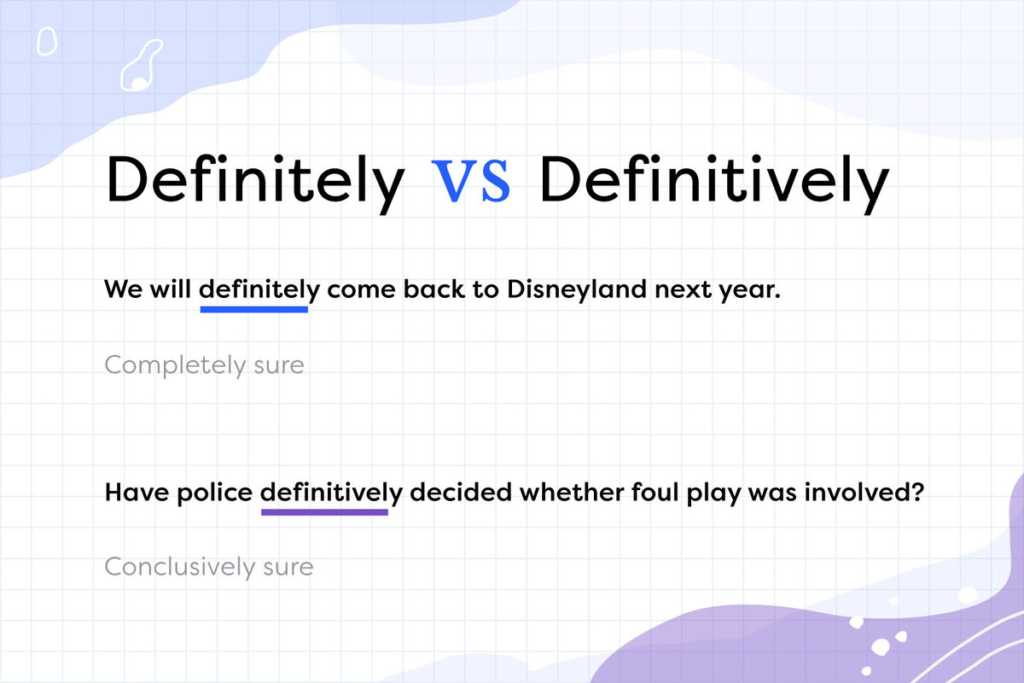
For example:
- I will definitely attend the meeting.
- She definitely knows the answer.
- We definitely need more time.
- That is definitely the right decision.
- He definitely wants to join us.
The word can also be used to give a strong answer to a question.
Also read:Friend or Freind: Which One Is Correct?
For example:
“Would you like to come with us?”
“Definitely!”
Here, definitely means “Yes, certainly” or “Yes, without a doubt.”
What Does Definitely Mean in Simple English?
In very simple English, definitely means “for sure.”
You can often replace definitely with phrases such as:
- for sure
- certainly
- surely
- without doubt
- absolutely
- clearly
- unquestionably
However, these words are not always perfect replacements because their tone and strength can vary depending on the sentence.
Consider this example:
She will definitely be there.
This means the speaker is very sure that she will be there.
Another example is:
I definitely want to learn English.
This means the speaker is certain about wanting to learn English.
Definitely Pronunciation
The pronunciation of definitely is one reason people often misspell it.
In American English, definitely is commonly pronounced approximately like:
“DEF-uh-nit-lee”
The exact pronunciation can vary slightly depending on the speaker and context.
The important point is that the word is written definitely even though the pronunciation may not make every written vowel sound obvious.
This is a common feature of English. English spelling and pronunciation do not always match perfectly.
For example, people may hear the word and mentally reconstruct its spelling as “definately.” Because the pronunciation does not strongly emphasize the written “e” before “l-y,” the correct spelling can be easy to forget.
How to Spell Definitely
If you are searching for “how to spell definitely,” remember this simple pattern:
DEFINITE + LY = DEFINITELY
The base word is definite.
Add -ly:
definite + ly = definitely
This is one of the easiest ways to remember the correct spelling.
You can break the word into parts:
DEF + IN + ITE + LY
Or simply remember:
DEFINITE → DEFINITELY
The word does not become “definate” before adding -ly.
That is why “definately” is incorrect.
How Do You Spell Definitely?
If you ask, “How do you spell definitely?” the answer is:
Definitely.
A useful spelling check is to write the related word definite first.
Correct:
definite → definitely
Incorrect:
definate → definately
The spelling of definite gives you an important clue. Since the adjective is definite, the adverb is definitely.
For example:
This is a definite answer.
becomes:
I definitely know the answer.
Why Do People Spell Definitely as Definately?
The misspelling “definately” is common because English spelling can be confusing.
There are several reasons people make this mistake.
The Pronunciation Can Be Misleading
When people say definitely quickly, some of the vowels are reduced in normal speech. The word may sound closer to “definitely” without every letter being clearly pronounced.
As a result, people sometimes spell the word according to how they think it sounds.
They may write:
definately
instead of:
definitely
The Word Looks Like “Definite”
People know that the word is connected to definite, but they may accidentally change the spelling of the middle section.
The correct relationship is:
definite → definitely
A person may incorrectly think:
definate → definately
That small change creates the common misspelling.
English Has Many Similar Spelling Patterns
English contains many words with similar endings and vowel combinations. People naturally apply familiar spelling patterns when they are unsure.
This is especially common with long words.
Definitely has several syllables and several vowels, which makes it harder to spell from memory than a short word such as “surely.”
Typing Makes the Problem Worse
Fast typing can also lead to errors.
Someone may know the correct spelling but type “definately” automatically because the incorrect version is familiar. Autocorrect and spell-check tools can help, but they are not a substitute for knowing the correct spelling.
Is Definately Correct?
No. Definately is not the standard correct spelling of the English word.
If you mean “certainly” or “without doubt,” the correct form is definitely.
Incorrect:
I will definately finish the project.
Correct:
I will definitely finish the project.
Although “definately” appears frequently online, its popularity does not make it a correct spelling.
A misspelled word can become very common because thousands or millions of people make the same mistake. Search engines may still recognize the intended word, but that does not change the standard spelling.
Definitely vs. Definately
The difference between definitely and definately is only one letter, but only one form is standard.
Definitely contains “ite” before “ly”:
definitely
Definately changes that pattern:
definately
The easiest comparison is:
definitely = correct
definately = incorrect
When writing professionally, use definitely.
Is Definatly a Word?
No. Definatly is another misspelling of definitely.
The spelling is missing letters from the standard form.
Incorrect:
I definatly agree with you.
Correct:
I definitely agree with you.
Because people often pronounce definitely quickly, they may leave out letters when typing it. This can produce forms such as definatly.
Is Definitly Correct?
No. Definitly is not the standard spelling.
It is another shortened misspelling of definitely.
The correct word contains the letters “e” and “e” in positions that are often dropped when someone types quickly.
Correct:
definitely
Incorrect:
definitly
For formal writing, avoid definitly.
Is Definetly Correct?
No. Definetly is also incorrect.
This version changes the vowel arrangement in the middle of the word.
Correct:
definitely
Incorrect:
definetly
The word comes from definite, so remembering the base word can help prevent this mistake.
Common Misspellings of Definitely
There are many variations of the same spelling mistake. Some are common enough to appear repeatedly in informal writing and online searches.
Common examples include:
- definately
- definatly
- definitly
- definetly
- definetely
- definitley
- definitelly
- definatley
- definatelly
- definitelly
- definitley
- defenitely
- definitle
- definatlye
- definatelyy
- definatlyy
- definitlyy
Not all of these forms are equally common. Some are simply typing errors, while others result from repeatedly misunderstanding the spelling pattern.
The most important ones to recognize are definately, definatly, definitly, definetly, and definetely.
Definately or Definitely: Which One Should You Use?
Always use definitely when you mean “certainly.”
For example:
Correct:
I definitely want to visit New York.
Incorrect:
I definately want to visit New York.
Correct:
She definitely understands the instructions.
Incorrect:
She definately understands the instructions.
Correct:
We definitely need to leave early.
Incorrect:
We definately need to leave early.
If you remember only one rule, remember this:
Definitely comes from definite.
Definitely in American English
Definitely is standard in American English.
It is appropriate in:
- Academic writing
- Business communication
- Emails
- Reports
- Essays
- News writing
- Professional documents
- Everyday conversation
- Text messages
- Social media
The level of formality may change, but the spelling does not.
For example, a casual text can say:
Definitely!
A professional email can say:
I will definitely attend the meeting.
Both use the same spelling.
How to Use Definitely in a Sentence
Definitely usually modifies a verb, adjective, or another part of a sentence to express certainty.
Definitely With a Verb
I definitely remember her.
They definitely need help.
We will definitely arrive before noon.
She definitely understands the problem.
Definitely With an Opinion
That is definitely a good idea.
This is definitely the best option for us.
It is definitely worth trying.
Definitely as a Short Answer
“Are you coming?”
“Definitely.”
Here, definitely works as a complete response because the meaning is understood from the question.
Examples of Definitely in Everyday English
Here are several natural examples:
- I will definitely call you tonight.
- She definitely deserves the award.
- We definitely need to check the schedule.
- He is definitely one of the best players on the team.
- I definitely remember meeting you.
- They definitely made the right choice.
- This is definitely worth the price.
- You should definitely try this restaurant.
- I definitely want to learn more.
- That was definitely an interesting experience.
These examples show how naturally the word fits into everyday American English.
Examples of Definitely in Professional Writing
Definitely can also appear in professional situations.
For example:
We definitely need to improve the customer experience.
The new strategy will definitely require additional planning.
I definitely agree with your recommendation.
This information will definitely help the team make a better decision.
In professional writing, however, be careful about using definitely when you cannot support a claim.
For example, saying:
This strategy will definitely increase sales.
is a very strong claim.
If you do not have evidence, a more cautious statement may be better:
This strategy is likely to increase sales.
Good writing is not only about spelling. It is also about choosing language that accurately represents your level of certainty.
Also read:Receive or Recieve:Which One Is Correct?
Definitely and Definite: Understanding the Connection
One of the best ways to understand the spelling is to look at the related words.
Definite
Definite is an adjective.
It means clear, certain, fixed, or specific.
Example:
We need a definite answer.
Definitely
Definitely is an adverb.
It means certainly or without doubt.
Example:
I definitely need an answer.
The spelling connection is:
definite → definitely
This relationship is extremely useful when you are trying to remember the correct definitely spelling.
Definitely vs. Absolutely
Definitely and absolutely can sometimes have similar meanings, but they are not identical in every situation.
Definitely often means “certainly.”
I will definitely go.
Absolutely can express very strong agreement or certainty.
I absolutely agree.
Both can be strong, but the best choice depends on the context.
Definitely vs. Certainly
Definitely and certainly are also close in meaning.
She will definitely come.
She will certainly come.
Both sentences express confidence.
Definitely is very common in everyday American English, while certainly can sometimes sound slightly more formal.
Definitely vs. Surely
Surely can also express confidence or expectation.
He will surely understand.
He will definitely understand.
However, surely can sometimes carry a different emotional tone or suggest that something is expected to be obvious.
Definitely is usually more direct.
Common Spelling Differences in English
The problem with definitely is part of a larger issue in English spelling.
Many words contain letters that are easy to omit, add, or rearrange.
Examples include:
- separate, not seperate
- necessary, not neccessary
- receive, not recieve
- occurrence, not occurence
- accommodation, not accomodation
- definitely, not definately
These words are often difficult because their spelling does not always match the way people expect them to sound.
Learning common spelling patterns is usually more effective than trying to memorize every word independently.
Definitely Misspelled: Why Searchers Still Find It
People may search for “definately,” “definatly,” or other incorrect versions because they are unsure about the spelling.
That creates a strong search intent around questions such as:
- Is definately correct?
- How do you spell definitely?
- Definitely or definately?
- Is definatly a word?
- What is the correct spelling of definitely?
- Why do I always spell definitely wrong?
A useful spelling guide should answer these questions clearly rather than simply saying that one version is wrong.
A Simple Memory Trick for Definitely
One of the best memory tricks is:
A definite answer is definitely correct.
Notice the connection:
definite → definitely
Another useful trick is to remember the phrase:
definitely has “finite” inside it.
Look at the letters:
d e f i n i t e l y
The sequence “finite” appears within the word:
deFINITEly
This can make the spelling easier to remember.
If you see “finite” inside definitely, it becomes harder to accidentally write “definately.”
Another Easy Trick: Think “Definite + Ly”
Instead of memorizing the entire word, divide it into two parts:
definite + ly
This produces:
definitely
This method is much safer than spelling the word based on pronunciation.
When you hear the word, do not try to spell every sound. Instead, think about the base word.
Definitely in Formal and Informal Communication
The spelling definitely is appropriate in almost every type of English communication.
Formal
We will definitely consider your proposal.
Neutral
I definitely think we should go.
Informal
Definitely!
The word works in all three situations.
The only thing that changes is the surrounding language.
When You Should Avoid Overusing Definitely
Although definitely is correct, using it too often can make writing sound repetitive.
For example:
We definitely need this. We definitely need that. We definitely should change this. We definitely should change that.
The spelling is correct, but the style can become repetitive.
Depending on the context, you could sometimes use:
- certainly
- clearly
- surely
- without question
- in fact
- strongly
- confidently
However, do not replace definitely simply to avoid repetition if definitely is the most natural word.
Definitely in Questions
Definitely can appear in questions when someone wants to confirm certainty.
For example:
Are you definitely coming?
This asks whether the person is certain about coming.
Another example:
Do we definitely need a reservation?
Here, definitely emphasizes the certainty of the requirement.
It can also be used in questions that challenge an assumption:
Are you definitely sure?
Although “definitely sure” can sound repetitive because both words express certainty, it is common in conversational English.
Definitely at the Beginning, Middle, and End of a Sentence
Definitely can appear in different positions.
Beginning
Definitely, we should consider another option.
Middle
We definitely should consider another option.
End
We should consider another option, definitely.
The middle position is often the most natural in ordinary conversation.
For example:
I definitely agree.
The Difference Between Spelling and Pronunciation
A major lesson from definitely is that pronunciation should not always be used as the only guide to spelling.
English contains many words where sounds are reduced during natural speech.
When people speak quickly, certain syllables may become less distinct. This can cause listeners to remember an approximate sound rather than the exact spelling.
That is why a person can pronounce definitely correctly but still write definately.
Knowing the word’s structure helps solve this problem.
Common Search Questions About Definitely
People who are uncertain about this word often search for very similar questions.
How to spell definitely
The correct spelling is definitely.
How do you spell definitely?
Spell it:
D-E-F-I-N-I-T-E-L-Y.
What is the correct spelling of definitely?
Definitely is the correct spelling.
Is definately correct?
No. Definately is a common misspelling.
Is definatly a word?
No. Definatly is not the standard spelling.
What does definitely mean?
It means certainly, surely, or without doubt.
How do you pronounce definitely?
It is commonly pronounced approximately “DEF-uh-nit-lee” in American English.
Definitely or Definately in School Writing
If you are writing an essay, assignment, research paper, or application, use definitely.
Incorrect spelling can make otherwise good writing look less polished.
For example:
I definately believe this policy is important.
should be:
I definitely believe this policy is important.
Teachers and editors generally expect standard spelling in formal writing.
The same rule applies to college applications and professional documents.
Definitely or Definately in Business Emails
Professional emails should also use definitely.
For example:
I will definitely send the updated document by Friday.
This looks professional and natural.
Using:
I will definately send the updated document by Friday.
introduces an avoidable spelling error.
If you use email frequently, adding definitely to your personal list of commonly misspelled words can help you remember it.
Definitely or Definately in Social Media
Informal social media posts often contain spelling mistakes, so you may see definately frequently.
For example:
I definately need a vacation!
This is understandable, but the standard spelling is:
I definitely need a vacation!
Also read:Believe or Beleive:Which One Is Correct?
Informal writing does not change the correct spelling.
Why “Definately” Feels Correct to So Many People
There is an interesting reason “definately” looks natural.
The spelling seems to match a possible pronunciation:

de-fin-ate-ly
People may also associate it with words ending in “-ate,” such as:
- separate
- fortunate
- accurate
- immediate
However, definitely is based on definite, not “definate.”
That difference is the key.
Once you understand the base word, the spelling becomes much easier.
Common Errors to Avoid
When writing definitely, watch for these mistakes:
Do Not Write “Definately”
Incorrect:
definately
Correct:
definitely
Do Not Drop the Second “i”
Incorrect:
definitly
Correct:
definitely
Do Not Rearrange the Letters
Incorrect:
definitley
Correct:
definitely
Do Not Add Extra Letters
Incorrect:
definitelly
Correct:
definitely
Do Not Let Pronunciation Control the Spelling
The word may sound different when spoken quickly, but the written form remains definitely.
A Quick Comparison Table
| Word | Status | Meaning |
| definitely | Correct | Certainly; without doubt |
| definately | Incorrect | Misspelling of definitely |
| definatly | Incorrect | Misspelling of definitely |
| definitly | Incorrect | Misspelling of definitely |
| definetly | Incorrect | Misspelling of definitely |
| definetely | Incorrect | Misspelling of definitely |
| definitley | Incorrect | Misspelling of definitely |
| definatley | Incorrect | Misspelling of definitely |
| defenitely | Incorrect | Misspelling of definitely |
How to Remember the Correct Spelling Forever
If you repeatedly type “definately,” use a three-step method.
Step 1: Remember the Base Word
Think:
definite
Step 2: Add -ly
Think:
definite + ly
Step 3: Check the Middle
Make sure you have:
-ite-
not:
-ate-
So the final word is:
definitely
Another useful memory sentence is:
I am definitely certain.
The repeated connection between definitely and certainty can help reinforce the spelling.
Is “Definitely” an Adverb?
Yes.
Definitely is an adverb because it modifies or adds information to a verb, adjective, or statement.
For example:
She definitely knows.
Here, definitely modifies the verb “knows.”
In:
That is definitely true.
definitely adds emphasis to the statement.
Its role is to show certainty.
Can Definitely Be Used Alone?
Yes.
In conversation, definitely can be used as a one-word response.
Example:
“Would you like to come?”
“Definitely.”
The meaning is approximately:
“Yes, certainly.”
This usage is common in American English and other varieties of English.
Is Definitely a Strong Word?
Yes. Definitely expresses a high level of certainty.
Compare:
I might go.
This expresses uncertainty.
I will probably go.
This expresses a reasonable expectation.
I will definitely go.
This expresses strong certainty.
Because definitely is strong, writers should use it when they genuinely mean to express confidence.
What Is the Opposite of Definitely?
The opposite depends on the context.
Possible contrasting expressions include:
- maybe
- possibly
- perhaps
- uncertainly
- probably not
- not necessarily
For example:
I will definitely attend.
contrasts with:
I might attend.
This shows the difference between certainty and uncertainty.
Related Words to Definitely
Several words are related to definitely through meaning or word formation.
These include:
- definite
- definitely
- indefinite
- indefinitely
- definition
- define
- definitive
Understanding these related words can make the spelling easier to remember.
The most important spelling relationship is:
definite → definitely
Definitely and Definitive
Do not confuse definitely with definitive.
Definitive is an adjective meaning authoritative, final, or conclusive.
For example:
The study provides a definitive answer.
Definitely is an adverb:
The study definitely provides useful information.
The words are related but serve different grammatical purposes.
Why Spell-Check May Not Solve Everything
Modern spell-checkers can catch many misspellings, but they are not perfect.
A person may also become accustomed to seeing an incorrect spelling and fail to notice it.
Learning the correct spelling is therefore more reliable than depending entirely on software.
If “definately” is something you often type, pay special attention whenever you write it.
Definitely Spelling: A Final Check
Before publishing or sending an important document, check whether you wrote:
definitely
or:
definately
If you see the second version, replace it with definitely.
A simple mental check is:
definite + ly = definitely
This works in almost every situation.
Final Thoughts
The correct spelling is definitely, while definately is a common but incorrect spelling. The confusion usually comes from pronunciation, the structure of the word, and the fact that English spelling does not always match the way words sound. The easiest way to remember the correct form is to connect it with definite: definite + ly = definitely. Whether you are writing an email, school assignment, professional document, social media post, or everyday message, definitely is the standard spelling to use when you mean “certainly” or “without doubt.”
FAQs About Definitely or Definately
What is the easiest way to remember definitely?
Remember the phrase “definite + ly.” The base word definite gives you the correct spelling of definitely.
Why is definately such a common misspelling?
The pronunciation of definitely can make the middle vowels less noticeable, so people often spell the word based on how they hear it.
Can I use definately in informal texting?
You may see people use it in informal messages, but it is still a misspelling. Definitely is the correct form in both formal and informal English.
Is definitely always an adverb?
Yes. Definitely functions as an adverb and is commonly used to express certainty or strong confidence.
What are some words that are similar to definitely?
Depending on the context, similar words include certainly, surely, absolutely, and unquestionably. The best choice depends on the exact meaning and tone of the sentence.