The English language has many words that are easy to understand but surprisingly difficult to spell. “Believe” is one of them. Many people know exactly what the word means, but when they type it, they hesitate between “believe” and “beleive.”
So, which one is correct?
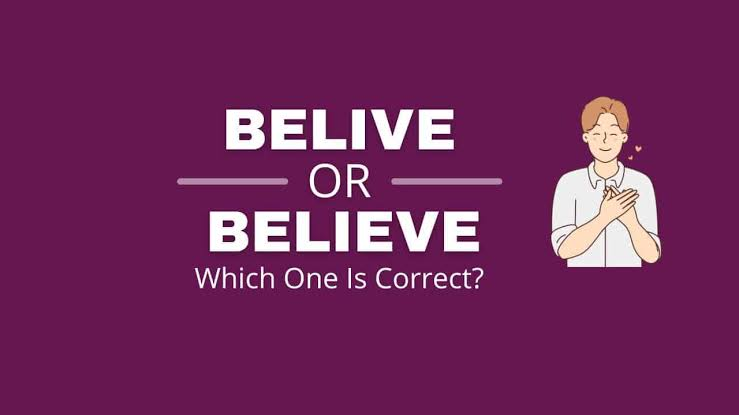
The correct spelling is “believe.”
“Beleive” is a common misspelling of “believe.”
The confusion usually happens because of the familiar English spelling pattern “i before e except after c.” When people remember that pattern, they may naturally place the “i” before the “e” and write “beleive.” However, the correct spelling of the word is “believe,” with “ie” after the first “l.”
This article explains the difference between believe and beleive in simple English. It covers the correct spelling, meaning, pronunciation, grammar, examples, common mistakes, related words, and easy memory tricks. It also explains other common forms such as “belive,” “beleve,” “believ,” “beleived,” “belived,” “beleiver,” “beliver,” and “beleif.”
If you have ever searched for “believe or beleive,” “how to spell believe,” “correct spelling of believe,” or “is beleive correct,” this guide provides the complete answer.
Believe or Beleive: Which Spelling Is Correct?
The correct spelling is:
Believe
The incorrect spelling is:
Beleive
For example:
Correct: I believe you.
Incorrect: I beleive you.
Correct: She believes in herself.
Incorrect: She beleives in herself.
Correct: Do you believe this story?
Incorrect: Do you beleive this story?
The main spelling difference is the order of the letters “i” and “e.”
Correct:
b-e-l-i-e-v-e
Incorrect:
b-e-l-e-i-v-e
The word “believe” contains “ie,” not “ei.”
What Does Believe Mean?
“Believe” is a verb that generally means to accept something as true, to have confidence in someone or something, or to hold an opinion that something is true.
Capitalize My Title
For example:
“I believe you.”
This means that I accept what you are saying as true.
Another example is:
“I believe this plan will work.”
Here, the speaker thinks the plan will work and has confidence in that possibility.
“Believe” can also describe trust or confidence in a person.
For example:
“My parents believe in me.”
This means the parents have confidence in the person and their abilities.
The exact meaning depends on how the word is used in a sentence.
Also read:Weird or Wierd:Which One Is Correct?
Believe Meaning in Simple English
In very simple English, “believe” means:
To think that something is true or to have trust or confidence in someone or something.
Common meanings include:
- to accept something as true
- to trust someone
- to have an opinion
- to have confidence in something
- to have faith in someone or something
- to think something is possible or likely
For example:
“I believe him.”
This means I think he is telling the truth.
“I believe in you.”
This means I have confidence in you.
“I believe it will rain.”
This means I think rain is likely.
These sentences show that “believe” can express different but related ideas.
How Do You Spell Believe?
If you are wondering how to spell believe, the correct spelling is:
B-E-L-I-E-V-E
The easiest part to remember is the middle:
L-I-E
So you can think of the word as:
BE + LIE + VE
This is only a memory trick, but it can help you remember the order of the letters.
The correct spelling is:
believe
Not:
beleive
Not:
belive
Not:
beleve
Not:
believ
How Do You Pronounce Believe?
“Believe” has two syllables.
It is commonly pronounced approximately like:
“bih-LEEV”
The stress falls on the second syllable.
You can break it into:
be + lieve
The pronunciation is important because it helps you recognize the word when listening, but it does not completely explain its spelling.
This is one reason English spelling can be difficult. A person may hear “believe” clearly but still be unsure whether the middle letters should be “ie” or “ei.”
The best approach is to learn the spelling separately:
believe
Believe vs. Beleive
The difference between “believe” and “beleive” is only one letter position, but that small difference matters.
| Spelling | Correct? | Explanation |
| believe | Yes | Standard English spelling |
| beleive | No | Common misspelling |
| belive | No | Missing “e” |
| beleve | No | Incorrect vowel pattern |
| believ | No | Missing final “e” |
| beleiving | No | Incorrect spelling of believing |
| believing | Yes | Correct -ing form |
| beleived | No | Incorrect past form |
| believed | Yes | Correct past form |
| belived | No | Incorrect past form |
| beleiver | No | Incorrect spelling |
| believer | Yes | Correct noun |
| beleif | No | Incorrect spelling |
| belief | Yes | Correct noun |
The key lesson is simple: “believe” is the base form, and related words need to be built from the correct spelling.
Why Do People Confuse Believe and Beleive?
There are several reasons why people write “beleive” instead of “believe.”
The “I Before E” Rule
One of the biggest reasons is the traditional spelling rule:
“I before E except after C.”
Many people learn this rule in school.
Examples that seem to follow the “i before e” pattern include:
- field
- friend
- piece
- chief
- achieve
- believe
Because “believe” actually does follow the “ie” pattern, this rule is not necessarily the problem for the base word itself.
The confusion often happens because people remember the sounds rather than the actual letter sequence. They may hear the long “ee” sound and become uncertain about whether the word should contain “ie” or “ei.”
English spelling rules also have many exceptions, so relying on a single rule for every word can create mistakes.
The Pronunciation Is Not Enough
When you hear “believe,” you hear approximately “bih-leev.”
The sound does not clearly tell you whether the word is written:
believe
or
beleive
Both might seem possible if you are spelling the word from sound alone.
This is a common problem in English. Many words have spellings that cannot be predicted perfectly from pronunciation.
The Letter Order Is Easy to Reverse
The main mistake is a simple transposition:
Correct:
ie
Incorrect:
ei
When someone writes quickly, the letters may be reversed automatically.
This is especially common when a person knows the word but has not developed a strong visual memory of its spelling.
People See the Misspelling Online
If someone frequently sees “beleive” online, the incorrect spelling can begin to look familiar.
This creates an interesting psychological problem.
Correct spelling often feels familiar because you have seen it many times.
But repeated exposure to an incorrect spelling can also make that spelling feel natural.
That is why proofreading and dictionary checks can be useful when you are unsure.
Is Beleive Correct?
No.
“Beleive” is not the standard spelling of the English verb “believe.”
If you are writing professional English, use:
“I believe you.”
Not:
“I beleive you.”
The same rule applies in school assignments, business writing, website content, emails, applications, reports, and other standard forms of writing.
Is Belive a Word?
“Belive” is generally not the correct spelling of the standard English verb “believe.”
The most common reason people write “belive” is that they leave out the second “e.”
Correct:
believe
Incorrect:
belive
For example:
Incorrect: “I belive everything will be fine.”
Correct: “I believe everything will be fine.”
The missing “e” changes the spelling, but the intended word is usually obvious from context.
Beleive Meaning: Does It Have a Meaning?
“Beleive” does not have a separate standard meaning in modern English when used as a misspelling of “believe.”
If someone searches for “beleive meaning,” they are usually trying to find the meaning of “believe.”
For example:
“I beleive this is true.”
The writer almost certainly means:
“I believe this is true.”
Therefore, when explaining “beleive meaning,” the useful answer is that “beleive” is a misspelling and “believe” is the correct word.
Belive Meaning
The same applies to the search phrase “belive meaning.”
“Belive” is generally a misspelling of “believe.”
If someone writes:
“I belive you.”
The intended meaning is:
“I believe you.”
Therefore, the correct word to learn is “believe.”
Other Common Misspellings of Believe
The confusion does not stop at “beleive.” Several other forms can appear because people spell the word according to sound or accidentally leave out letters.
Beleve
“Beleve” is an incorrect spelling.
Correct:
believe
Incorrect:
beleve
The mistake happens when the writer leaves out the “i” before the final “e.”
Example:
Incorrect: “I beleve that she is right.”
Correct: “I believe that she is right.”
Believ
“Believ” is incomplete.
Correct:
believe
Incorrect:
believ
The final “e” is important in the standard spelling.
For example:
Incorrect: “I believ you.”
Correct: “I believe you.”
Beleiving
“Beleiving” is an incorrect form of “believing.”
The correct spelling is:
believing
This is an important example because the spelling changes when the “-ing” ending is added.
Base word:
believe
-ing form:
believing
The final “e” is removed before adding “-ing.”
So:
believe → believing
Not:
beleive → beleiving
Believing Spelling Explained
“Believing” is the correct spelling.
It is formed from “believe” by removing the final “e” and adding “-ing.”
The process is:
believe
Remove the final e:
believ
Add -ing:
believing
So the correct form is:
believing
Examples:
“I am believing in the process.”
However, in natural English, some contexts would more commonly use “I believe in the process” rather than the continuous form.
Another example:
“She is believing what he says.”
This sentence can be grammatical in a particular context, but “She believes what he says” is usually more natural for a general statement.
The important spelling point remains:
believing
not:
beleiving
Beleived vs. Belived
Both “beleived” and “belived” are incorrect spellings.
The correct past tense is:
believed
This is one of the most important forms to learn because the spelling changes when “-ed” is added.
Base form:
believe
Past tense:
believed
The final “e” remains, and the word takes “-d.”
So:
believe → believed
Not:
beleive → beleived
And not:
belive → belived
Examples:
Correct: “I believed her.”
Incorrect: “I beleived her.”
Incorrect: “I belived her.”
Beleived Meaning
“Beleived” does not have a separate standard English meaning. It is an incorrect spelling of “believed.”
If someone writes:
“She beleived the story.”
They mean:
“She believed the story.”
“Believed” is the past tense and past participle of “believe.”
It means that someone accepted something as true or had confidence in something in the past.
For example:
“I believed him when he told me the truth.”
This means I accepted his statement as true at that time.
Belived Meaning
“Belived” is also a misspelling.
The correct form is:
believed
For example:
Incorrect: “They belived the story.”
Correct: “They believed the story.”
The most common reason for this error is dropping the second “e” from “believe.”
A useful memory strategy is to remember:
believe → believed
The word keeps the “ie” sequence.
Beleiver vs. Beliver
Another common spelling problem occurs with the noun “believer.”
Correct:
believer
Incorrect:
beleiver
Incorrect:
beliver
A believer is a person who believes in something.
For example:
“She is a strong believer in education.”
“He is a believer in hard work.”
The spelling comes from:
believe → believer
The final “e” is removed before the suffix “-er” is added.
So:
believe
becomes:
believer
The internal “ie” remains.
Beleif vs. Belief
“Belief” is the correct noun.
“Beleif” is incorrect.
Correct:
belief
Incorrect:
beleif
This is another very common spelling reversal.
The relationship between “believe” and “belief” can cause confusion because they are closely related words.
Believe is a verb.
Belief is a noun.
For example:
“I believe you.”
Here, “believe” is the verb.
“My belief is based on experience.”
Here, “belief” is the noun.
Belief vs. Believe
Understanding “belief vs believe” is important because the two words are related but perform different grammatical roles.
Believe Is a Verb
A verb describes an action, state, or process.
Examples:
“I believe you.”
“She believes in herself.”
“They believe the story.”
Belief Is a Noun
A noun names a thing, idea, concept, or state.
Examples:
“His belief was strong.”
“Her beliefs are important to her.”
“The belief influenced his decision.”
A simple way to remember the difference is:
believe = action or state
belief = idea or conviction
Also read:Protection or Protction:Which One Is Correct?
Believe and Belief Examples
Compare these sentences:
“I believe in hard work.”
“My belief in hard work motivates me.”
“She believes that he is honest.”
“Her belief in his honesty is strong.”
“They believe the information is correct.”
“Their belief was based on evidence.”
The spelling and grammar are different because the words have different functions.
Believe, Believes, Believed, and Believing
The verb “believe” appears in several common forms.
Believe
Used with I, you, we, and they in the present tense.
Examples:
“I believe you.”
“We believe this is correct.”
“They believe the plan will work.”
Believes
Used with he, she, and it in the simple present.
Examples:
“She believes you.”
“He believes in himself.”
“The company believes the product will succeed.”
Believed
Past tense and past participle.
Examples:
“I believed her.”
“They believed the story.”
“She had believed that everything was fine.”
Believing
The -ing form.
Examples:
“Believing in yourself can help.”
“They are believing the information.”
The exact grammar depends on the sentence, but the spelling patterns remain important.
Common Sentences With Believe
The word “believe” appears in many everyday expressions.
I Believe You
This means:
“I accept what you are saying as true.”
Example:
“I believe you. You do not need to explain everything again.”
I Don’t Believe You
This means:
“I do not think what you are saying is true.”
Example:
“I don’t believe you were awake all night.”
Believe Me
This expression asks someone to trust what you are saying.
Example:
“Believe me, this is the easiest way to solve the problem.”
Believe in
“Believe in” can mean to have confidence in someone or something.
Example:
“I believe in you.”
It can also express acceptance of an idea or concept.
Example:
“Do you believe in luck?”
The exact meaning depends on the context.
Believe That
“Believe that” introduces something the speaker considers true.
Example:
“I believe that we can solve the problem.”
In everyday speech, “that” is often omitted:
“I believe we can solve the problem.”
Both forms can be correct.
Believe in Yourself
One of the most common phrases involving “believe” is:
“Believe in yourself.”
This means having confidence in your own abilities, judgment, or potential.
For example:
“If you want to achieve your goal, you need to believe in yourself.”
Here, “believe in” does not simply mean accepting a fact. It expresses confidence.
This is an important example because “believe” can have a broader meaning than simply “think something is true.”
Believe vs. Think
“Believe” and “think” can sometimes be used in similar ways.
For example:
“I think he is right.”
“I believe he is right.”
Both sentences express an opinion.
However, “believe” can sometimes suggest stronger confidence or acceptance than “think.”
Compare:
“I think the meeting starts at five.”
“I believe the meeting starts at five.”
The second may suggest that the speaker has a reason for thinking so, although both can communicate uncertainty.
Context and tone determine the exact difference.
Believe vs. Trust
“Believe” and “trust” are related but are not always interchangeable.
“Believe” often means accepting something as true.
“I believe his story.”
“Trust” often focuses on confidence in a person’s reliability, honesty, or judgment.
“I trust him.”
You can believe someone’s statement without necessarily trusting the person in every situation.
For example:
“I believe what she said, but I don’t trust her decisions.”
This shows why context matters.
Believe in vs. Believe
The phrases “believe” and “believe in” can have different meanings.
“I believe you.”
This means I accept what you say as true.
“I believe in you.”
This means I have confidence in you.
Compare:
“I believe him.”
“I believe in him.”
The first usually focuses on accepting his words as true.
The second usually focuses on confidence in his ability, character, or potential.
This small preposition can therefore change the meaning.
Why the Correct Spelling Matters
A misspelling such as “beleive” may be easy for readers to understand, but correct spelling still matters.
Good spelling improves:
- clarity
- professionalism
- readability
- credibility
- communication
- reader confidence
In casual text messages, a small spelling mistake may not matter.
In a résumé, business proposal, school paper, website, article, or professional email, repeated spelling mistakes can make the writing appear careless.
Learning “believe” correctly is therefore useful for both everyday and professional English.
Believe in American English
For a US audience, the standard spelling is:
believe
American English does not use “beleive” as an alternative spelling.
Examples:
“I believe you.”
“She believes in her team.”
“We believed the information.”
“They are believers in the idea.”
The spelling remains consistent.
Common Believe Spelling Mistakes
Here are some of the most common mistakes to avoid.
Beleive
Incorrect:
“I beleive you.”
Correct:
“I believe you.”
Belive
Incorrect:
“I belive the story.”
Correct:
“I believe the story.”
Beleve
Incorrect:
“I beleve this is true.”
Correct:
“I believe this is true.”
Believ
Incorrect:
“I believ him.”
Correct:
“I believe him.”
Beleiving
Incorrect:
“She is beleiving the story.”
Correct spelling:
believing
Beleived
Incorrect:
“They beleived him.”
Correct:
“They believed him.”
Belived
Incorrect:
“They belived the information.”
Correct:
“They believed the information.”
Beleiver
Incorrect:
“He is a beleiver.”
Correct:
“He is a believer.”
Beliver
Incorrect:
“She is a beliver in hard work.”
Correct:
“She is a believer in hard work.”
Beleif
Incorrect:
“His beleif was strong.”
Correct:
“His belief was strong.”
Easy Ways to Remember Believe
If you regularly make this believe spelling mistake, a memory trick can help.
Remember “IE”
The most important part is:
IE
The word is:
believe
The middle sequence is:
lie
You can visually notice:
be + lie + ve
The “lie” portion gives you the correct letter order.
Think “I Before E” for Believe
Interestingly, “believe” actually follows the familiar “i before e” pattern.
The relevant sequence is:
ie
So if you remember the phrase “I before E,” it can help with “believe.”
However, do not rely on the rule for every English word because English contains many exceptions.
Break the Word Into Parts
Try:
be + lieve
or:
be + lie + ve
The second method can make the spelling easier to visualize.
Write It Several Times
Write:
believe
believe
believe
believe
believe
Repeated writing creates visual familiarity.
After seeing the correct form many times, “beleive” may begin to look obviously wrong.
How to Spell Believe Without Making a Mistake
When you hesitate, slow down for a second.
Think:
B-E-L-I-E-V-E
Then check the middle:
I-E
If you see:
E-I
you have probably written “beleive,” which is incorrect.
This quick check can prevent the most common spelling mistake.
How Search Queries Reveal the Confusion
People who are uncertain about the word may search for several variations.
Common searches include:
- believe or beleive
- belive or believe
- beleive or believe
- beleive meaning
- belive meaning
- beleve
- believ
- beleive spelling
- belive spelling
- beleiving
- believing spelling
- beleived
- belived
- beleived meaning
- belived meaning
- beleiver
- beliver
- beleif
- belief vs believe
- how to spell believe
- correct spelling of believe
- is beleive correct
- is belive a word
- believe misspelling
- believe spelling mistake
These variations usually come from one basic need: the writer wants to know the correct form.
The best way to handle these searches is not to repeat every variation unnecessarily. Instead, explain the spelling clearly and naturally address the underlying questions.
Semantic Relationship Between Believe and Related Words
“Believe” belongs to a family of closely related English words.
These include:
- belief
- believer
- believing
- believes
- believed
- unbelievable
- believable
- unbelieving
- disbelief
- disbelieve
Understanding this word family makes spelling easier.
For example:
believe → belief
believe → believer
believe → believing
believe → believed
believe → believes
The spelling changes slightly depending on the suffix or grammatical form, but the root relationship remains visible.
Believe and Believable
“Believable” means something that can reasonably be believed.
Example:
“Her explanation was believable.”
The word is built from “believe” and the suffix “-able,” with spelling adjustments.
The opposite is:
unbelievable
Example:
“The result seemed unbelievable.”
Both words are common in everyday English.
Believe and Unbelievable
“Unbelievable” means difficult to believe or extremely surprising.
Example:
“The view was unbelievable.”
Depending on context, it can mean:
- difficult to accept as true
- extremely surprising
- extraordinary
- amazing
The spelling begins with “believe,” so knowing the base word helps.
Believe and Disbelieve
“Disbelieve” means not to believe something.
For example:
“I disbelieve the claim.”
However, in ordinary conversation, people may more naturally say:
“I don’t believe the claim.”
The related noun is:
disbelief
Example:
“She stared at him in disbelief.”
Also read:Uncuymaza: Meaning, Origins, Cultural Ideas, Modern Uses, and Why the Term Is Gaining Attention
Believe in Professional Writing
The word “believe” is perfectly acceptable in professional writing when it expresses an appropriate idea.
For example:
“We believe this approach will improve customer satisfaction.”
“I believe the report requires further review.”
“The company believes the new process will reduce delays.”
However, writers should avoid using “I believe” unnecessarily when a direct statement is clearer.
For example:
“I believe the data shows an increase.”
Depending on the context, this may be clearer as:
“The data shows an increase.”
The best choice depends on whether the writer is expressing an interpretation, opinion, or established fact.
Believe in Academic Writing
“Believe” can be used in academic writing, but careful writers often distinguish between personal belief and evidence-based conclusions.
For example:
“I believe this theory is correct.”
This clearly presents a personal position.
A more academic version might be:
“The evidence supports this theory.”
The second sentence is more objective.
This does not mean “believe” is incorrect in academic writing. It simply means that academic style often favors precise language that clearly identifies evidence and reasoning.
Believe in Everyday Conversation
In everyday American English, “believe” is extremely common.
Examples include:
“I can’t believe it!”
“Can you believe that?”
“I believe you.”
“I don’t believe this.”
“Believe me.”
“I believe in you.”
These expressions appear frequently in conversations because the word can communicate trust, surprise, doubt, confidence, and opinion.
“I Can’t Believe It”
“I can’t believe it” is a common expression.
It can communicate surprise, shock, excitement, or disbelief.
For example:
“I can’t believe we won!”
Here, the speaker is extremely surprised or excited.
Another example:
“I can’t believe he said that.”
Here, the speaker is shocked or surprised by someone’s words.
The expression is common in both spoken and written English.
“Can You Believe It?”
“Can you believe it?” is another common expression.
It usually invites someone to share your reaction to surprising information.
For example:
“Can you believe it? We finished the project early.”
The question does not always require a literal answer. It can simply express surprise.
Believe as a Useful Vocabulary Word
Learning “believe” is valuable because it appears in many different situations.
You can use it to talk about:
- opinions
- facts
- trust
- confidence
- personal values
- expectations
- assumptions
- faith
- uncertainty
- surprise
Because it has so many uses, it is an important vocabulary word for English learners.
A Simple Comparison Chart
| Word | Meaning | Example |
| believe | Think something is true | I believe you. |
| belief | An idea or conviction | Her belief was strong. |
| believer | A person who believes | He is a believer in education. |
| believing | Present participle/gerund form | Believing in yourself matters. |
| believed | Past tense | I believed her. |
| believes | Third-person present | She believes him. |
| believable | Able to be believed | The story sounds believable. |
| unbelievable | Difficult to believe | The result was unbelievable. |
| disbelieve | Not believe | They disbelieve the claim. |
| disbelief | Lack of belief | He stared in disbelief. |
Correct vs. Incorrect Spelling Examples
Correct:
“I believe everything will work out.”
Incorrect:
“I beleive everything will work out.”
Correct:
“She believes in herself.”
Incorrect:
“She beleives in herself.”
Correct:
“They believed the explanation.”
Incorrect:
“They beleived the explanation.”
Correct:
“He is a believer in education.”
Incorrect:
“He is a beleiver in education.”
Correct:
“Her belief was based on experience.”
Incorrect:
“Her beleif was based on experience.”
Correct:
“They are believing the information.”
Incorrect:
“They are beleiving the information.”
Correct:
“I cannot believe what happened.”
Incorrect:
“I cannot beleive what happened.”
A Quick Proofreading Method
If you are proofreading your writing and see “believe,” check three things.
First, make sure the word begins with:
bel
Second, check the middle:
ie
Third, check the ending:
eve
Together:
bel + ie + ve
This gives:
believe
If you see:
beleive
stop and switch the “e” and “i.”
If you see:
belive
add the missing “e.”
If you see:
beleve
add the missing “i.”
If you see:
believ
add the final “e.”
Why “Believe” Is Easy to Misspell Even for Fluent Speakers
Spelling difficulty is not always connected to English ability.
A fluent English speaker may know the meaning, pronunciation, and grammar of “believe” perfectly but still type “beleive” occasionally.
This can happen because spelling depends on memory and visual patterns.
Fast typing also increases the chance of reversing letters.
Therefore, making a spelling mistake does not necessarily mean someone does not understand the word.
What matters is learning the correct pattern and developing enough familiarity to recognize the error.
Does “Beleive” Have a Different Meaning?
No, not when it is being used as an attempted spelling of “believe.”
For example:
“I beleive you.”
There is no separate meaning intended. The writer means:
“I believe you.”
Similarly:
“beleive meaning”
is normally a search for the meaning of “believe.”
The same applies to “belive meaning.”
Is Believe a Verb or a Noun?
“Believe” is primarily a verb.
Example:
“I believe you.”
“Belief” is the noun.
Example:
“My belief is strong.”
This distinction is important because some writers mistakenly use “believe” where “belief” is needed.
Incorrect:
“My believe is strong.”
Correct:
“My belief is strong.”
Incorrect:
“I have a strong believe.”
Correct:
“I have a strong belief.”
Learning the difference between the verb and noun can prevent another common spelling and grammar mistake.
Common Grammar Mistakes With Believe
Believe vs. Belief
Incorrect:
“I have a strong believe in teamwork.”
Correct:
“I have a strong belief in teamwork.”
Believe vs. Believes
Incorrect:
“She believe in herself.”
Correct:
“She believes in herself.”
Believe vs. Believed
Incorrect:
“Yesterday, I believe him.”
Correct:
“Yesterday, I believed him.”
Believe vs. Believing
Incorrect:
“He is believe the story.”
Correct:
“He is believing the story.”
However, as noted earlier, “He believes the story” may be more natural when describing a general state.
Final Answer: Believe or Beleive?
The answer is clear:
Believe is correct.
Beleive is incorrect.
The correct spelling is:
B-E-L-I-E-V-E
The most common spelling mistake is reversing the “i” and “e” to create:
B-E-L-E-I-V-E
The incorrect form “beleive” is widely recognizable as a misspelling, but it should not be used in standard professional English.
Other common incorrect forms include “belive,” “beleve,” “believ,” “beleiving,” “beleived,” “belived,” “beleiver,” “beliver,” and “beleif.”
The correct related forms are:
believe
believes
believed
believing
believer
belief
The easiest way to remember the spelling is to focus on the “ie” in the middle:
bel-ie-ve
Once you learn that sequence, the word becomes much easier to spell correctly.
Final Thoughts
“Believe” is the correct spelling, while “beleive” is a common spelling mistake. The main problem is the order of the letters “i” and “e,” along with the fact that English spelling can be difficult to predict from pronunciation. Remember the correct form as B-E-L-I-E-V-E, or simply break it into “be-lie-ve.” Once you become familiar with this pattern, you can also more easily spell related words such as “believes,” “believed,” “believing,” “believer,” and “belief.” Whether you are writing casually or professionally, using “believe” instead of “beleive” will keep your English clear, polished, and correct.
FAQs About Believe and Beleive
Why is “beleive” such a common spelling mistake?
“Beleive” is common because the “ie” and “ei” combinations are easy to reverse when people type quickly or spell from sound. The two versions also look very similar, so the error can be difficult to notice during proofreading.
Is “believe” pronounced the same in every English-speaking country?
The pronunciation is broadly similar, but accents can change the exact vowel sounds. The word is generally pronounced with two syllables, with the stress on the second syllable.
What is the easiest way to teach the spelling of believe?
A useful method is to remember the middle sequence “ie” and divide the word mentally as “be-lie-ve.” Writing the word repeatedly can also build strong visual memory.
Can “believe” be used when talking about future events?
Yes. For example, “I believe the team will win tomorrow” expresses the speaker’s opinion or expectation about a future event.
What is the difference between “I believe you” and “I believe in you”?
“I believe you” usually means that you accept what the person says as true. “I believe in you” usually means that you have confidence in the person’s abilities, character, or potential.